What Makes Aluminum Non-Slip Stair Treads Safer Than Grit Tape?
Quick Answer
Aluminum stair treads are safer than grit tape for outdoor stairs because they provide permanent, mechanically fastened traction that does not peel, degrade in UV exposure, or fail during freeze-thaw cycles. Unlike adhesive-based products such as anti slip tape or grit tape for steps, aluminum non-slip stair treads maintain consistent slip resistance in rain, snow, and high-traffic environments — making them the safer long-term solution for homeowners, property managers, and contractors.
Slip-and-fall accidents remain one of the leading causes of injury in and around homes. According to national safety data from organizations like the National Floor Safety Institute (NFSI) and CDC, falls account for millions of emergency room visits each year. Outdoor stairs are a major risk area — especially when exposed to rain, ice, algae, or worn wood surfaces.
If you’re comparing grit tape for outdoor stairs to permanent aluminum stair treads, this guide will explain — technically and clearly — why the materials, installation methods, and long-term performance differ significantly.
At HandiTreads, we specialize in permanent outdoor non-slip stair treads — and understanding why they outperform adhesive solutions starts with how each product actually works.
The Core Difference: Adhesive vs Mechanical Fastening
The biggest safety difference comes down to the installation method.
Grit Tape (Adhesive-Based)
Relies entirely on adhesive bonding
Requires a non-porous, clean, dry, properly prepared surface
Vulnerable to moisture infiltration
Can peel or lift at edges
Adhesive weakens in UV exposure and freeze-thaw cycles
Aluminum Stair Treads (Mechanically Fastened)
Secured with screws directly into wood or decking
No reliance on glue or adhesive
Can be used on unevestairs
Stable in extreme temperatures
Designed for permanent outdoor use
Adhesives fail. Mechanical fasteners don’t.
That difference alone changes long-term safety.
The Facts
Multiple sources confirm the limitations of adhesive-based traction products outdoors. Surface preparation requirements are strict, and even minor moisture contamination reduces bonding strength, as explained in this analysis on why adhesive grit treads shouldn’t be used outdoors. Freeze–thaw cycles and UV exposure further accelerate adhesive breakdown and edge curling, a problem detailed in this breakdown of outdoor non-slip stair tread performance. Facility management research also shows that exterior non-skid tape frequently requires replacement due to peeling and wear over time (Facility Management – Stair Tread Safety Costs). Additionally, peer-reviewed wear studies demonstrate that surface-applied abrasive treatments lose measurable slip resistance due to environmental exposure and abrasion (ScienceDirect study on anti-slip surface durability). Research on slip resistance testing further confirms that friction levels drop significantly when walking surfaces are wet (Slip resistance evaluation research). Together, the data supports the conclusion that mechanically fastened, textured aluminum stair treads provide more consistent long-term safety performance outdoors.
That was dense–let’s break it down.
Why Grit Tape Fails Outdoors
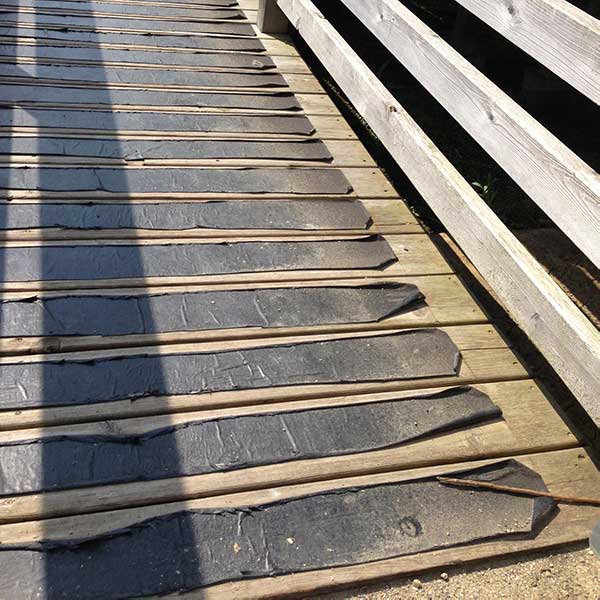
Products like anti-slip tape or no-slip tape are often marketed as quick fixes. Indoors, where protected, they can work for a fair amount of time. Outdoors, where the environment is much harsher, they will fail quickly.
1. Surface Preparation Requirements
For grit tape for steps to adhere properly, the surface must be:
Non-pourous, smooth, and intact
Clean and Dry
Free of dust
Above minimum temperature
Outdoor stairs rarely meet those conditions consistently.
Wood expands and contracts. Composite decking shifts. Moisture remains trapped in pores. Even slight surface contamination reduces adhesion strength.
2. Freeze-Thaw Cycles Break Adhesives
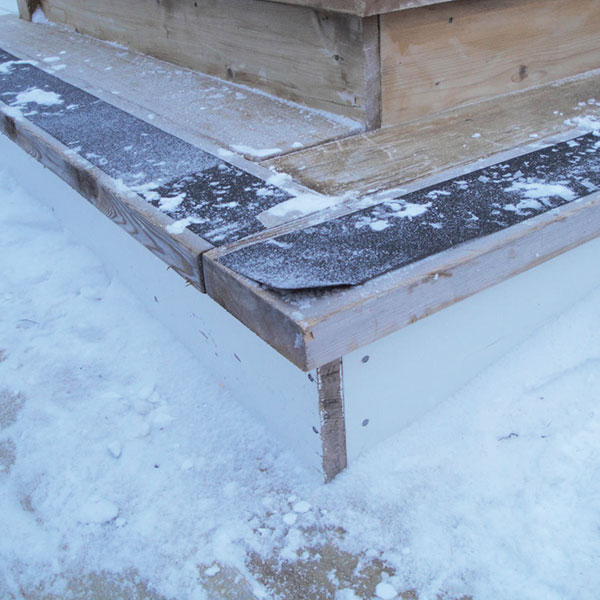
When water seeps under tape edges:
It freezes
Expands
Pushes the adhesive upward
This leads to:
Curling edges
Bubbling
Full detachment
Once the edge lifts, it becomes a tripping hazard — ironically increasing risk.
3. UV Degradation
Adhesive-backed traction products degrade under direct sunlight. Over time:
Adhesive dries out
Tape becomes brittle
Surface grit wears off
Edges crack
Outdoor stair treads must handle full UV exposure year after year. Tape simply wasn’t designed for that long-term outdoor punishment.
Traction: Abrasive Grit vs Textured Aluminum
Now let’s compare slip resistance performance.
Grit Tape Traction
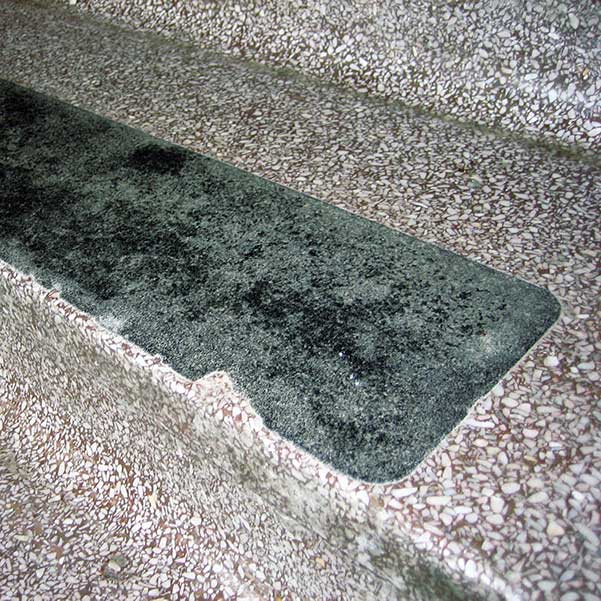
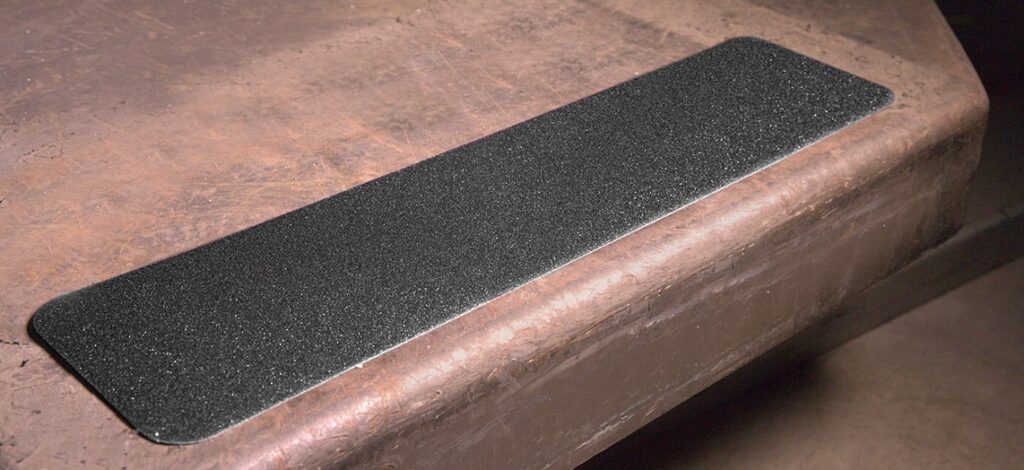
Grit tape uses an abrasive mineral coating bonded to a thin strip. It initially provides high friction — but:
Grit wears down with foot traffic
Surface becomes smoother
Adhesive edge separation reduces stability
Dirt and debris clog abrasive surface
After months of use, traction declines significantly.
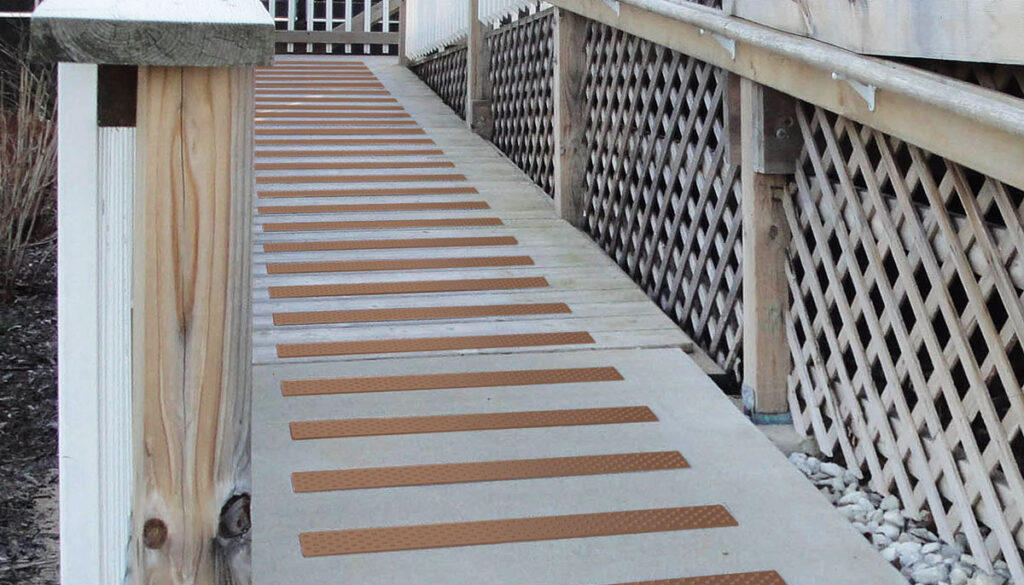
Aluminum Non-Slip Stair Treads Outdoor
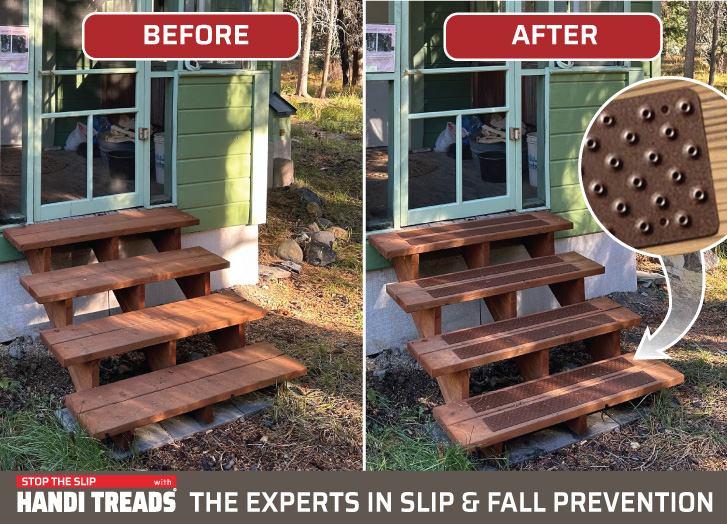
High-quality metal stair treads use extruded or punched traction devices with:
Raised ridges or traction dimples
Serrated traction profiles
Built-in drainage channels
Unlike tape, the traction surface is structural — not glued on.
Aluminum provides:
Consistent grip in rain
Snow-shedding ridges
Resistance to wear
Stability under heavy foot traffic
For environments with pets, kids, delivery drivers, or tenants, consistent traction matters more than short-term friction.